
Top Signs You Need Air Duct Cleaning Service – Don’t Ignore These
The signs that ducts need cleaning are usually quiet: a system running longer than it used to, a musty smell that shows up only when the heat or AC kicks on, dust coming back on the furniture days after you wiped it. If you notice more than one of these, the ductwork is the likely cause. If you’d rather not climb around in the basement guessing, call (833) 901-6929 and we’ll take a look.
We answer 24/7. Fast dispatch from 7am to 7pm, Sunday through Friday.
Key Takeaways
- A musty smell that appears only when the HVAC runs points to contamination in the ducts, not to the room itself.
- Longer runtimes, uneven rooms, and dust that returns within days can all trace back to restricted airflow or a leak in the duct network.
- Filter, coil, and duct problems look alike from the couch. Finding the right one saves you a pointless service call.
- Renovation dust is the heaviest load most duct systems face, and a single system run spreads it through the house.
Why Do the Warning Signs Show Up in the System and Not the Ducts?
Most duct problems announce themselves through how your HVAC behaves, not through anything you can see in the duct itself. When debris coats the inside of the duct liner, airflow drops, and the system compensates by running longer to reach the temperature you set. That extra runtime is one of the clearest signals that something upstream is restricted.
In our experience, homeowners tend to look at the thermostat first and the filters second, then call an HVAC tech. Often the answer sits in the duct network the whole time. The pattern is cause and effect:
- Restricted airflow from debris buildup puts the system under load. Blower and coil work harder and longer.
- Duct leakage sends conditioned air into a wall cavity instead of a room, so the system keeps pushing to catch up.
- Coil contamination slows heat transfer, which again looks like longer runtimes.
They present identically at the thermostat. That’s the trap. A Fordham homeowner can spend money on a repair that fixes nothing because the actual restriction was never diagnosed. Airflow restriction cost is real, whether it’s measured in energy or in a repair bill.
How Do You Tell Duct Contamination Apart From Filter, Coil, or Leakage Problems?
You tell them apart by where the symptom appears and how it behaves over time. A dirty filter degrades gradually and changes once you replace it. Duct contamination tends to produce an odor and a dust pattern that keep coming back regardless of filter changes. Coil issues often cool unevenly or barely at all. Leakage shows up as a particular room that never gets comfortable, no matter what the thermostat says.
The distinction matters because a misdiagnosis costs money in the wrong direction. Here’s a simple way to sort what you’re seeing:
- Change the filter and watch for a week. If the musty smell and dust pattern persist, the filter wasn’t the cause.
- Note when the symptom appears. Odor that only arrives when the system starts points to what’s sitting in the duct liner.
- Check room-by-room temperature. One room consistently colder or warmer than the rest suggests leakage or a blockage in that branch of the network.
- Look at the dust texture. Fine, sticky dust that returns in days is different from normal household dust.
Worth flagging one safety note: if the problem turns out to be a coil or an electrical control, that’s a trained technician’s job, not a weekend project. Duct work itself is lower risk, but anything touching the HVAC unit or wiring should be handled by a professional.
Why Do Some Rooms in Fordham Homes Never Get Comfortable?
Uneven room temperatures usually mean the duct branch serving that room is either blocked or leaking, not that the thermostat is broken. In multi-story Fordham homes this shows up most on upper floors, where heat naturally rises and the duct run is longest. If the top floor is always warmer in summer and colder in winter while the ground floor is fine, the duct network is the first place to look.
A blocked branch reduces the volume of air reaching the room. A leaking joint loses conditioned air into the wall cavity before it arrives. Both look the same from the doorway, and both make the system run longer to compensate. A homeowner can check the visible vents for obstructions and confirm dampers are open, but the real diagnosis requires looking at the duct run itself.
This is the part of the job where duct repair and sealing earns its keep. Inspecting the network, finding the breach, and sealing it fixes the cause rather than just pushing more air through it. We find the leak, we seal the leak, and a room that never felt right gets a chance to.
Is Dust Coming Back Within Days a Cleaning Problem or a Duct Problem?
Dust that re-coats surfaces within a few days of cleaning is a duct problem, not a housekeeping one. Normal household dust settles over a week or more. A fast return means fine particles are being actively circulated by the duct system, and wiping counters just relocates them.
The tell is usually texture and location. Duct-borne dust tends to be very fine, settles on horizontal surfaces directly below supply vents, and reappears even in rooms nobody uses. If that pattern fits, the source is upstream in the duct network. Cleaning the room is treating the symptom.
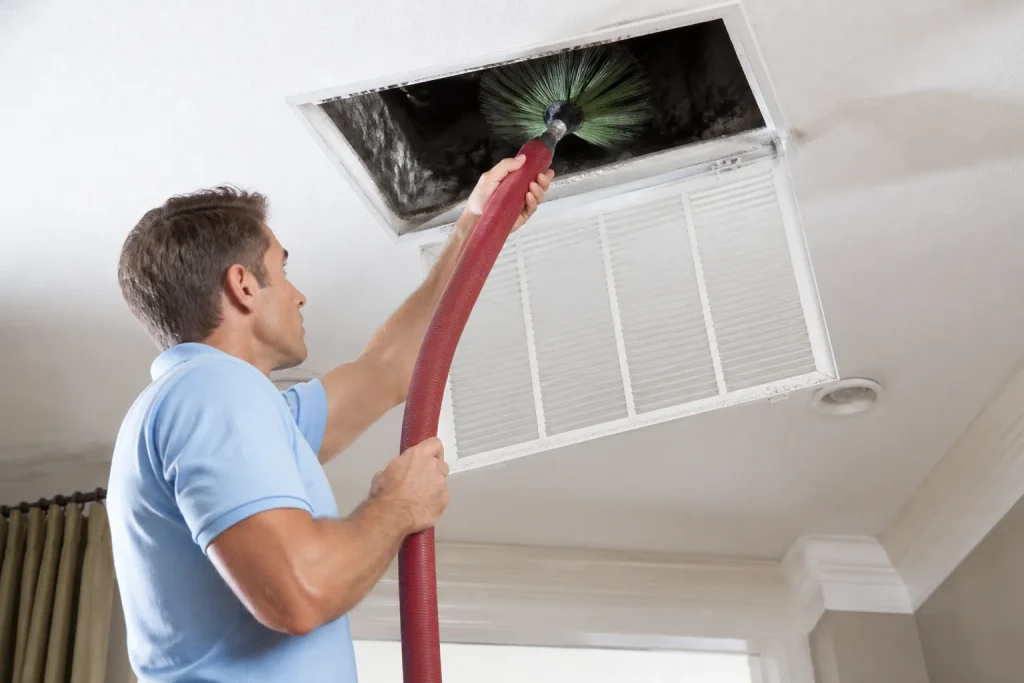
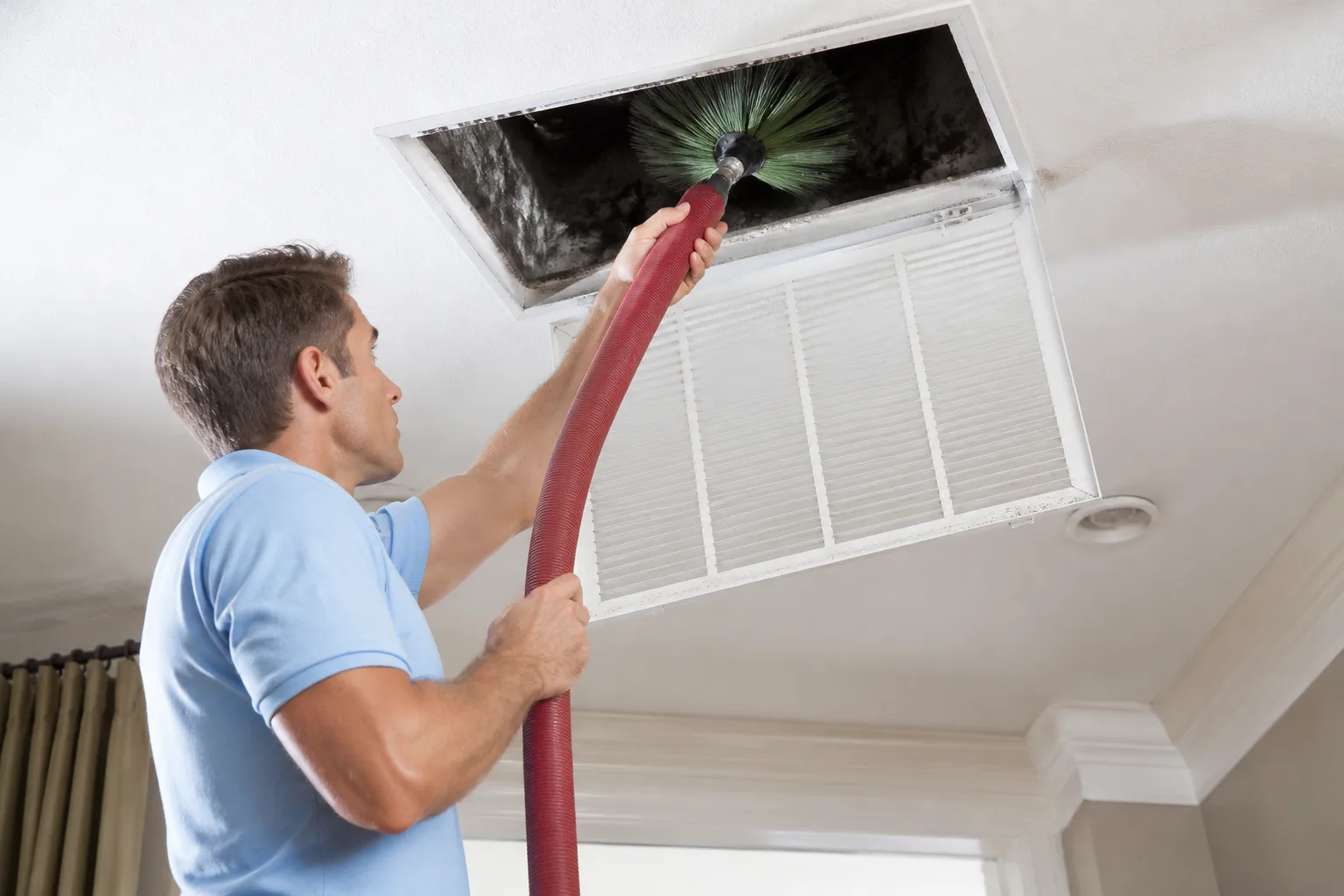
Here’s why professional equipment matters more than a household vacuum here. Consumer vacuums catch coarse debris and stir up the fine particles that cause the visible dust in the first place. Professional duct cleaning systems from Rotobrush are purpose-built for extracting debris from inside the duct liner while containing it. That’s the difference between a surface wipe and a real extraction. In Fordham, where older homes often have longer duct runs with more possible entry points, that containment matters even more.
Why Is Post-Renovation Dust the Heaviest Duct Load There Is?
Post-renovation contamination is the single highest-load scenario a duct system faces, higher than years of routine use. Drywall sanding produces dust finer than almost anything else in the house. Insulation fibers, sawdust, and construction debris follow it. All of it settles through open registers and into the duct network while the work is happening.
The first system run after a renovation moves that entire load into every room at once. Homeowners often assume the dust is just leftover from the work, and to some extent it is, but the part that got into the ducts keeps circulating. That’s when the fine dust on the furniture and the musty odor show up together.
Checking a duct system after renovation is worth doing before you decide the dust is an air quality issue rather than a duct one. A professional inspection looks at:
- Visible debris at supply and return registers.
- The return side, which usually collects the heaviest load.
- Duct joints and connections, where gaps let in construction dust and pull it through the system.
- Dryer vents, if renovation covered any part of the run.
If your air quality and sanitizing concern goes beyond debris, that’s where the full-service range helps. Abatement Technologies equipment is engineered for indoor air quality work, and pairing that with sanitizing addresses microbial and particulate concerns at once. Your entire air system, handled in one visit, is the point.
When Should You Call a Pro Instead of Checking Yourself?
Call a professional when the symptoms persist after a filter change, when multiple rooms show the same pattern, or when any part of the diagnosis points toward the HVAC unit or an electrical component. Those last cases are a trained technician’s territory and not something to work through on your own.
A clean duct system should deliver consistent temperature, no odor when the system starts, and dust that stays away for weeks. If you’re seeing two or more of these symptoms at once, professional-grade inspection is faster than trial and error. Rotobrush and Abatement Technologies are industry brands because they were built for duct work specifically, and a proper inspection moves through the network rather than guessing at the vents.
Down the road, if a dryer is taking two cycles to dry a load, the dryer vent is the next system to check. Not a housekeeping problem. Dryer vent cleaning is a fire risk matter. A trained technician can inspect that run in the same visit.
The Bottom Line
If you’re noticing a musty smell when the HVAC starts, longer runtimes, a room that never gets comfortable, or dust returning within days, the duct system is the likely cause. Those symptoms point to restricted airflow, leakage, or contamination, and they’re worth diagnosing before they turn into an HVAC repair bill. Our technicians have up to 8 years of experience sorting these symptoms when they call for a proper inspection.
If you’re in Fordham and need help, Air Duct Cleaning Fordham offers free estimates. Call (833) 901-6929. We answer 24/7. Fast dispatch from 7am to 7pm, Sunday through Friday. Every price is set per job by the written estimate, with before-and-after photos so you can see the difference.
Frequently Asked Questions
Change the filter and watch the symptoms for a week. If the musty smell, uneven rooms, or fast-returning dust persist, the filter wasn’t the cause and the duct network needs a look. A single filter change is cheap to rule out; guessing at the rest is not. Call (833) 901-6929 for a free estimate if the symptoms stay.
Yes, and it’s one of the more specific ones. If the odor appears only when the system kicks on, the source is what’s sitting in the duct liner being heated and pushed into the rooms. A smell that’s present all the time has a different cause and deserves a different look.
Yes. Drywall dust and insulation fibers are fine enough to work into the duct network through open registers and stay there. The first system run after the work spreads that load through every room, which is why the dust seems to double after a renovation. That’s the point where a professional check saves you weeks of wiping.
Often, yes, especially in multi-story Fordham homes where the upper floor is always warmer in summer and colder in winter. That pattern usually points to a leak or blockage in the duct branch serving that floor, not a thermostat fault. The diagnosis is worth making before you spend money on a repair that won’t fix it.
Written by the team at Air Duct Cleaning Fordham.
Need Air Duct Cleaning Help?
Call Air Duct Cleaning Fordham - the local pro we connect you with is licensed and insured, with free written estimates in Fordham.
(833) 901-6929