
Rotobrush Air Duct Cleaning in Fordham: A Homeowner’s Guide
Rotobrush isn’t a brand of vacuum. It’s a rotating brush system that physically scrubs the inside walls of your ducts while a vacuum pulls the loosened debris away, and that distinction matters because suction alone can’t break biofilm, caked dust, or the fine debris that clings to flex duct liner. Most homeowners in Fordham have never had this explained to them, so they end up comparing quotes for jobs that aren’t actually the same job. This guide walks through how the tool works, which duct materials it suits, and what a real appointment looks like in a home like yours. If you’d rather not sort it out alone, call (833) 901-6929.
How does the Rotobrush system actually work?
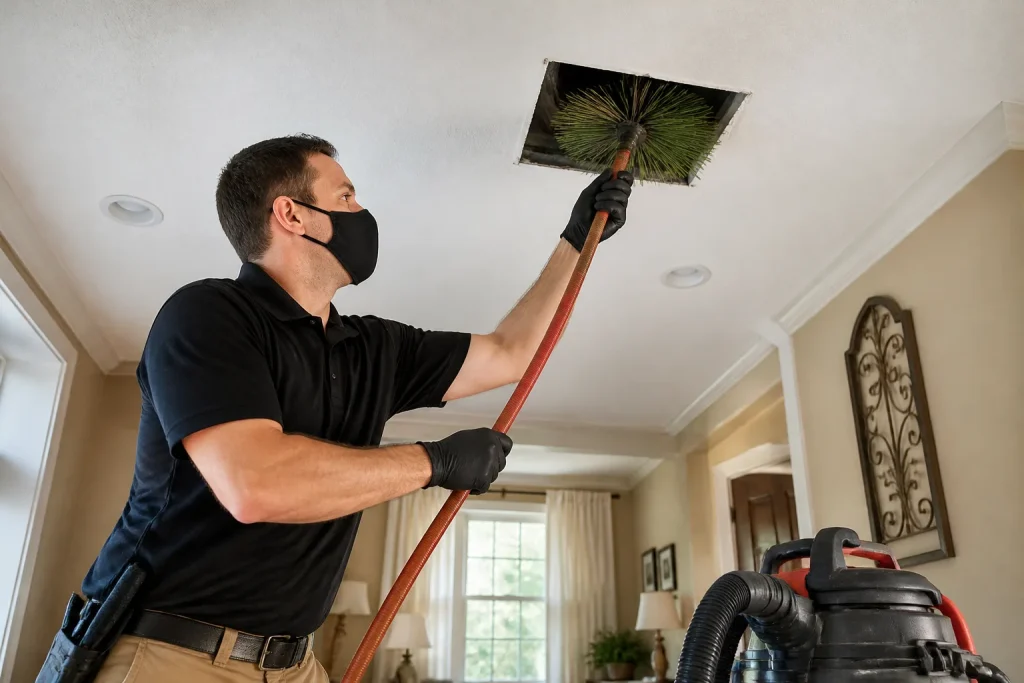
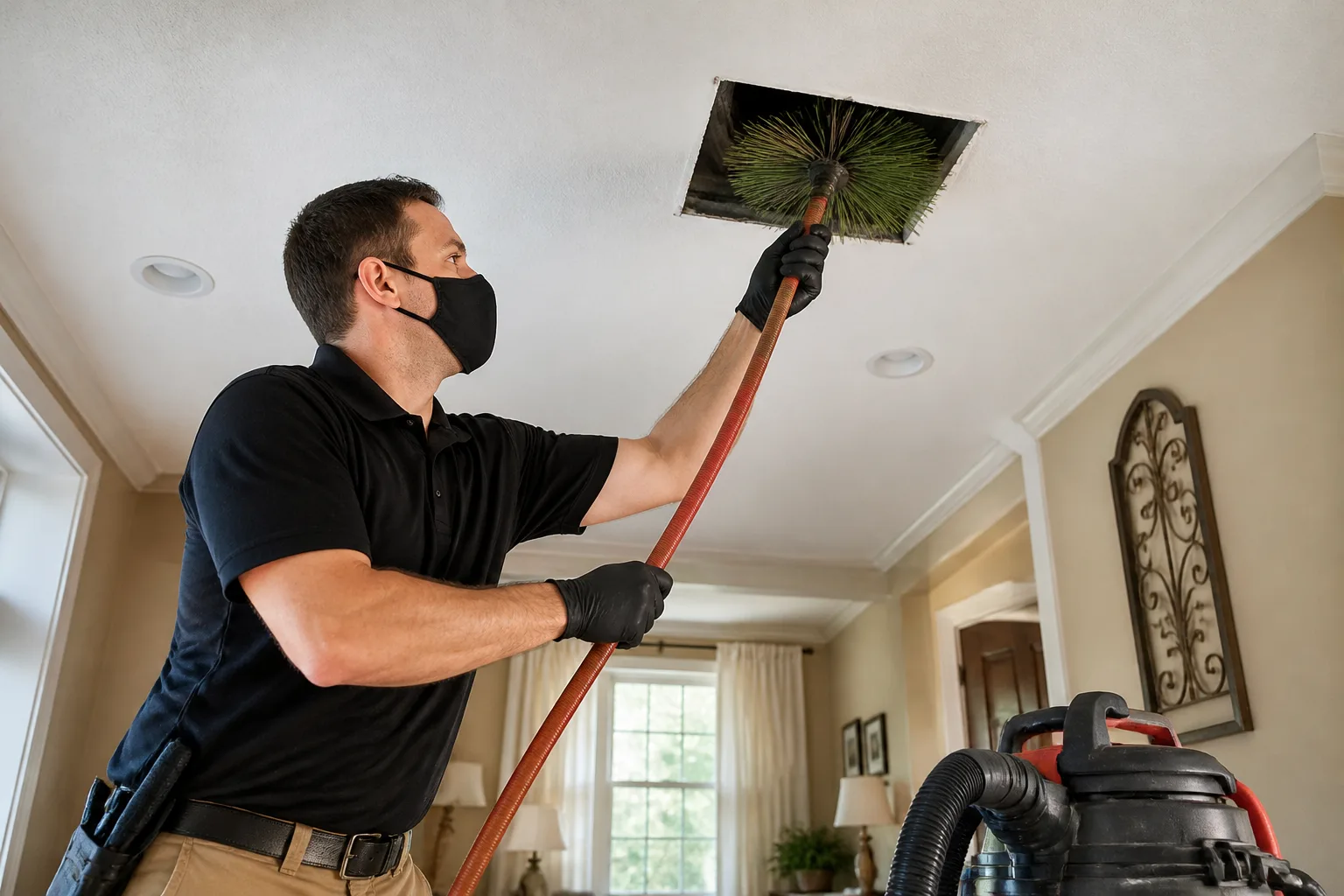
It’s two actions at once. A flexible rotating brush head travels through the duct run, and a high-powered vacuum hose connected to the same assembly captures what the brush kicks loose. The brush contacts the duct wall directly, which is the part pure negative pressure can’t do.
Think about the difference between rinsing a dirty pan and wiping it. A stream of water removes loose residue. A scrubber removes what has bonded to the surface. Duct walls collect a mix of settled dust, cooking oils, pet dander, and microbial film, and over time that film adheres. A negative pressure setup pulls hard on the whole system and captures airborne particulate well, but it has limited effect on material that’s stuck.
- The brush: a rotating, flexible whip that follows bends in the ductwork and scours the interior surface.
- The vacuum: runs simultaneously, so debris is captured at the point of agitation rather than settling back downstream.
- The containment: registers and access points are managed so the loosened material ends up in the collection unit, not in your living room air.
That simultaneous action is the whole point. Agitate and capture together, and you get a genuinely clean surface. Agitate without capture and you’ve just redistributed the problem. We use Rotobrush and Nikro equipment because both are purpose-built for this work, not repurposed shop vacuums with a hose taped on.
Which duct materials suit Rotobrush, and where does the method change?
Contact-based cleaning suits rigid sheet metal best, handles flexible duct with the right brush head and pressure, and needs the most care with fiberglass duct board. The tool doesn’t change. The technique does.
Sheet metal is the simplest case. The surface is rigid and smooth, so a rotating brush can work the full circumference without distortion. This is where Rotobrush shows its strengths most clearly, particularly on long straight runs with years of accumulated dust.
Flex duct is the common material in a lot of Fordham attic and basement runs, and it’s where a homeowner’s choice of contractor really shows. Flex duct has a plastic liner over a wire helix. An aggressive brush at the wrong speed can abrade or tear that liner, and a torn liner becomes a permanent collection point for dust and a path for air leaks. A technician working flex duct adjusts brush stiffness and feed rate, keeps the vacuum high, and watches for any sign of liner damage as the work proceeds.
Fiberglass duct board is the most delicate. Its interior face is a coated mat, and heavy scrubbing can break that coating down. Contact cleaning on duct board is done gently, often with soft brushes, and some runs are better served by vacuum-only cleaning with the brush method reserved for the harder sections.
This is the practical argument for hiring someone who inspects before they clean. The right method on the wrong duct material damages the system. In our experience, the inspection stage is where a good job is decided, often well before any equipment comes off the truck.
When is Rotobrush the right method, and when is it more than you need?
Contact cleaning earns its keep when debris is heavy, adhered, or the system has gone a long time without service. On a lightly soiled system in good condition, negative pressure alone may be all that’s needed, and you should hear that from whoever inspects your ducts.
These are the situations where the rotating-brush approach is clearly the better fit:
- Heavy debris loads. Years of settled dust compacted on horizontal runs, especially in low-airflow branches of the system.
- Post-renovation dust. Drywall dust is fine, sticky, and settles deep. It adheres to duct walls and is notoriously difficult to pull out with suction alone.
- Long-unserviced systems. When there’s no record of the ducts ever being cleaned, you’re usually dealing with bonded material, not loose dust.
- Musty odors that persist. Odors usually point to biological growth on a surface. That needs contact cleaning plus sanitation, not just airflow improvement.
- Pet and allergen households. Dander and hair fibers mat against duct walls and cling. Contact cleaning lifts them.
Where the method is more than necessary: a newer home with clean ducts and no symptoms, or a system cleaned recently with good filtration in place. If a technician tells you a two-year-old system with a clean return needs a full contact scrub, ask what they found on inspection. If they can’t show you, that’s your answer.
How a Rotobrush service fits into a complete system clean
Rotobrush cleaning is one step inside a full job, not the whole job. Supply and return ducts get cleaned, registers and grilles come off and get washed, the air handler and evaporator coil get inspected, and any leaks found along the way get sealed. Then sanitizing is applied where it’s appropriate.
That sequence is the reason we handle the entire air pathway rather than one slice of it. Some companies clean ducts and leave the coil alone. Some clean the coil but won’t touch sealing. When cleaning, repair, and sanitizing all live in one visit, you don’t have to coordinate between contractors or describe the same problem twice. Using Honeywell and Aprilaire components means the parts going into your system meet standards your existing HVAC equipment already recognizes.
The full pathway typically includes:
- Supply and return duct cleaning with contact and vacuum methods matched to each material.
- Register and grille removal and washing.
- HVAC unit and coil inspection, with cleaning where buildup is present.
- Duct repair and sealing on any breach or disconnected joint identified during the job.
- Air quality and sanitizing treatment where microbial or odor concerns exist.
Dryer vent cleaning runs alongside this. Those vents aren’t a maintenance afterthought. Lint accumulation in a dryer vent reduces airflow and creates a genuine fire risk, which is why we treat it as its own safety service rather than a $20 add-on tacked onto a duct invoice.
What should you expect during the appointment in a Fordham home?
Plan on most of a working day. Also expect access: the technician needs to reach the air handler, the main trunk lines, and every register, which means clearing closet floors, moving furniture away from return grilles, and making sure the attic or basement access is passable.
Here’s roughly how a Rotobrush appointment runs:
- Inspection first. The technician identifies duct materials, checks for disconnected joints or crushed flex runs, and notes any areas needing a gentler method.
- Setup and containment. Access holes are cut at strategic points in the trunk and branches. These get sealed when the work is done.
- Cleaning, section by section. Contact cleaning on the appropriate runs, vacuum capture throughout, and the registers removed and washed separately.
- HVAC and dryer vent check. Coil and air handler inspected; dryer vent cleaned if it’s part of the service.
- Repair and sealing. Leaks or breached joints found along the way get sealed before the system is closed back up.
- Sanitizing where warranted. Applied to surfaces where microbial growth or odor was identified.
- Final walkthrough. This is the part that answers the real question: was it actually done? Look for before-and-after photos of your own ducts, not stock images. Ask to see the access points properly sealed and the system running normally.
“Done” means the registers are back on, airflow is restored, photos show clean duct interiors, and the technician has walked you through what was found and corrected. In a Fordham home with mixed sheet metal and flex runs, the tech should be able to tell you exactly which sections were contact-cleaned and which weren’t, and why.
When should you call a professional rather than handle this yourself?
Duct cleaning isn’t a homeowner project. The equipment is specialized, the access work involves cutting and resealing the duct system, and contact cleaning done wrong on flex duct or duct board causes damage that costs more to fix than the cleaning would have. If you’re seeing musty smells that return, visible dust streaking from registers, or an HVAC system that hasn’t been serviced in years, call a professional rather than renting anything.
Our technicians have up to 8 years of experience, and every job is priced per system by written estimate before work starts. No per-vent pricing, no bait pricing that balloons once the truck is parked.
Related services in Fordham: if your ducts are the starting point but not the whole story, Air Duct Cleaning Fordham covers what’s involved, and we handle dryer vent cleaning as a separate safety service. When the coil and air handler need attention, HVAC cleaning is the right next step.
The Bottom Line
Rotobrush is a rotating brush and simultaneous vacuum, and the combination is what makes it effective where suction alone falls short. It suits sheet metal ducting best, works on flex with a careful technique, and needs gentler treatment on duct board. It’s the right call for heavy debris, post-renovation dust, and long-unserviced systems, and it’s often more than a clean, well-maintained system needs. We use Rotobrush and Nikro equipment because they’re built for this work, and we pair contact cleaning with HVAC inspection, register washing, duct sealing, and sanitizing so the whole system gets addressed rather than one section of it.
If you’re in Fordham and need help, Air Duct Cleaning Fordham offers free estimates. Call (833) 901-6929. We answer 24/7. Fast dispatch from 7am to 7pm, Sunday through Friday.
Frequently Asked Questions
Most Fordham homes fall in a typical range based on the number of systems and the condition found on inspection, and you get one flat price per system before any work starts. The final price is set by the written estimate, so the number you agree to is the number you pay. Call (833) 901-6929 for an exact quote. Estimates are free.
Cheap quotes usually cover less work: vacuum-only cleaning, no register removal, no coil inspection, and no sealing of joints found during the job. A rotating-brush clean with containment, register washing, and repair takes more time and more equipment. Ask what the quote includes before comparing prices. Call (833) 901-6929 and we’ll tell you exactly what our estimate covers.
You get before-and-after photos of your own ducts, and you should look at them. A technician who cleaned the system can show you the access points, the sealed joints, and the duct interiors. If nobody offers photos, ask. Call (833) 901-6929 to book an inspection and estimate.
Most homes do fine on a multi-year schedule, adjusted for pets, allergies, recent renovation, and how well the system is filtered. Homes with heavy shedding pets or recent construction often need it sooner. The honest answer comes from inspecting the ducts, not from a fixed calendar. Call (833) 901-6929 for a free assessment of what your system actually needs.
Written by the team at Air Duct Cleaning Fordham.
Need Air Duct Cleaning Help?
Call Air Duct Cleaning Fordham - the local pro we connect you with is licensed and insured, with free written estimates in Fordham.
(833) 901-6929