
Last updated November 22, 2026
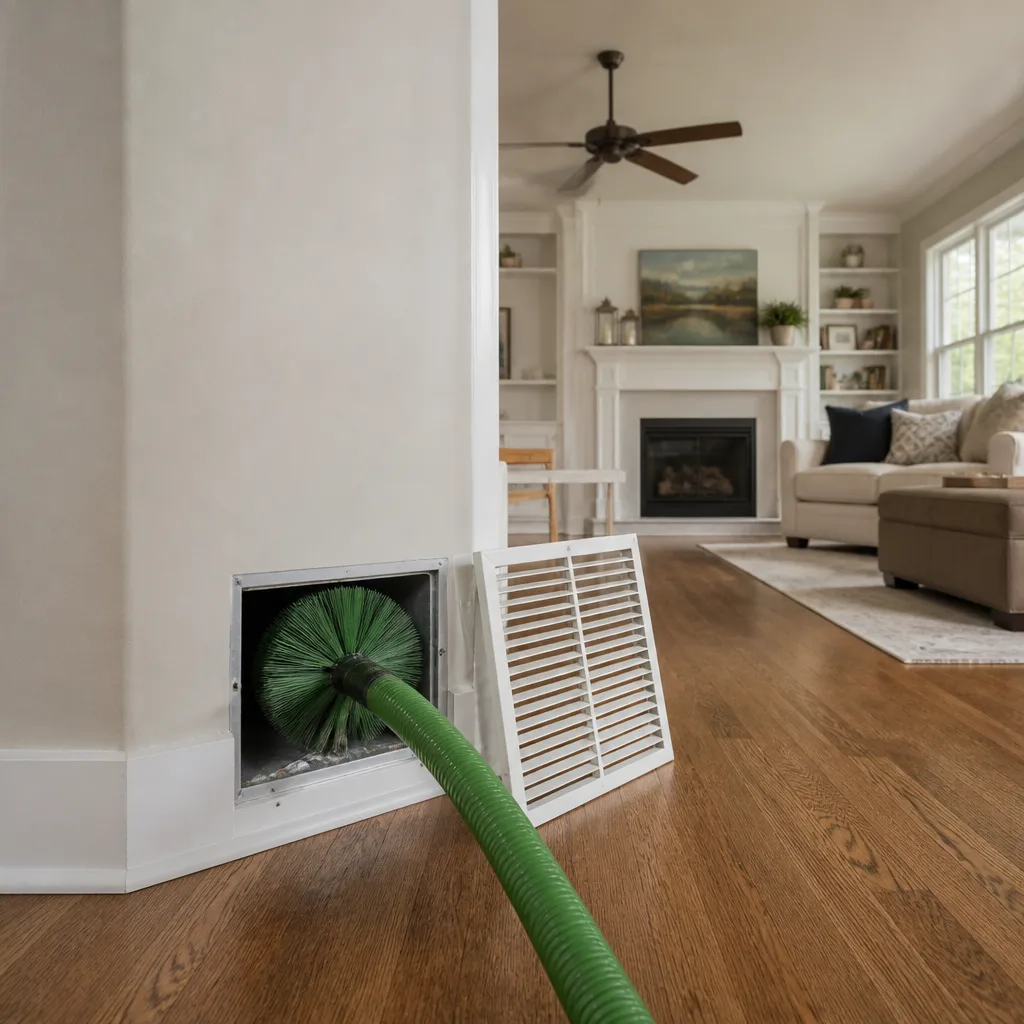 Whole-home duct cleaning
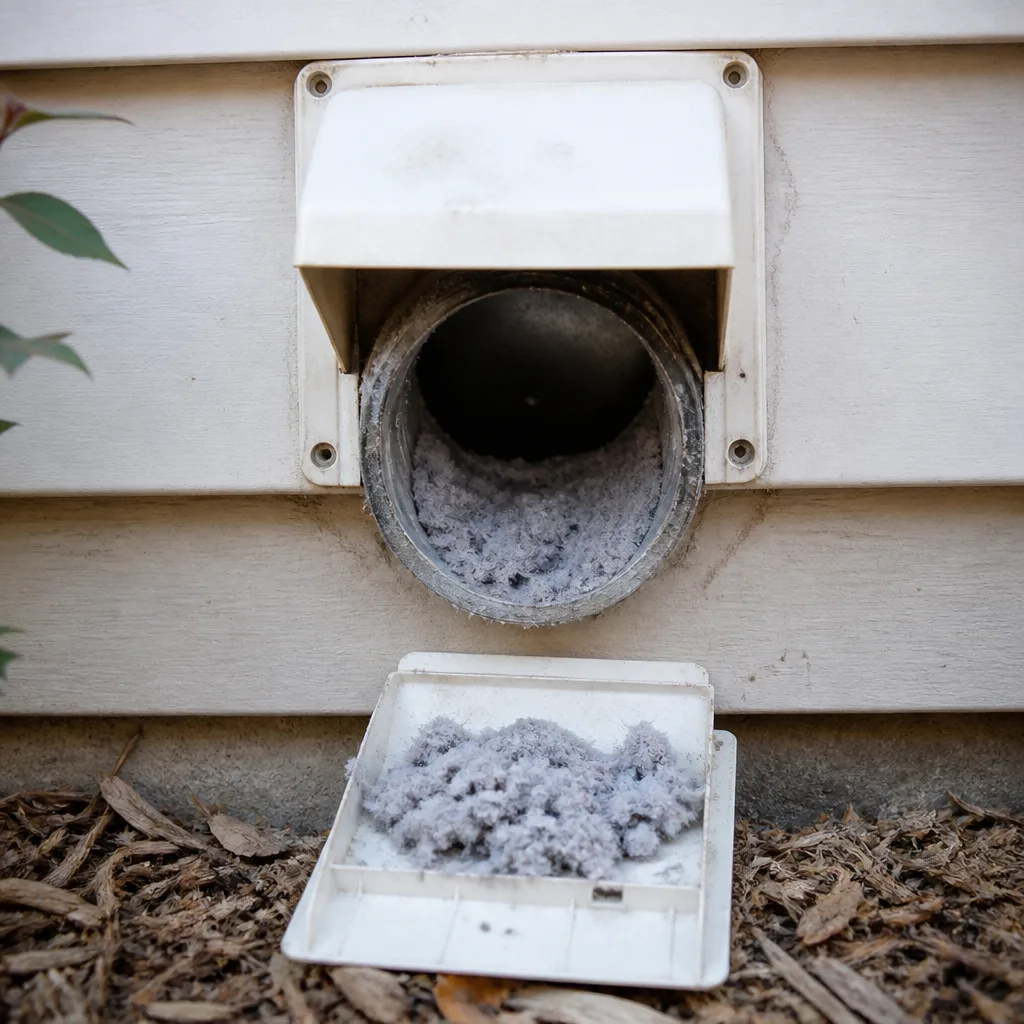 Dryer vent cleaning
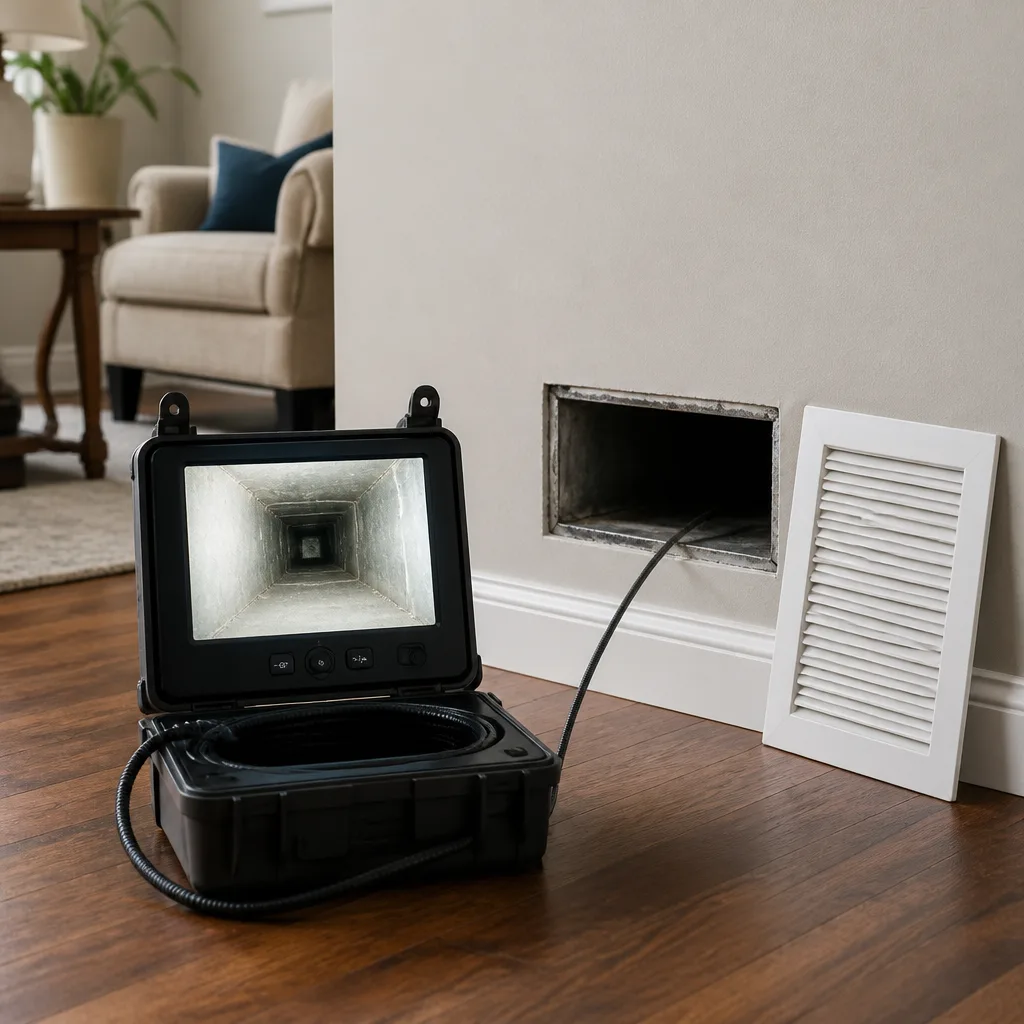 Camera inspection
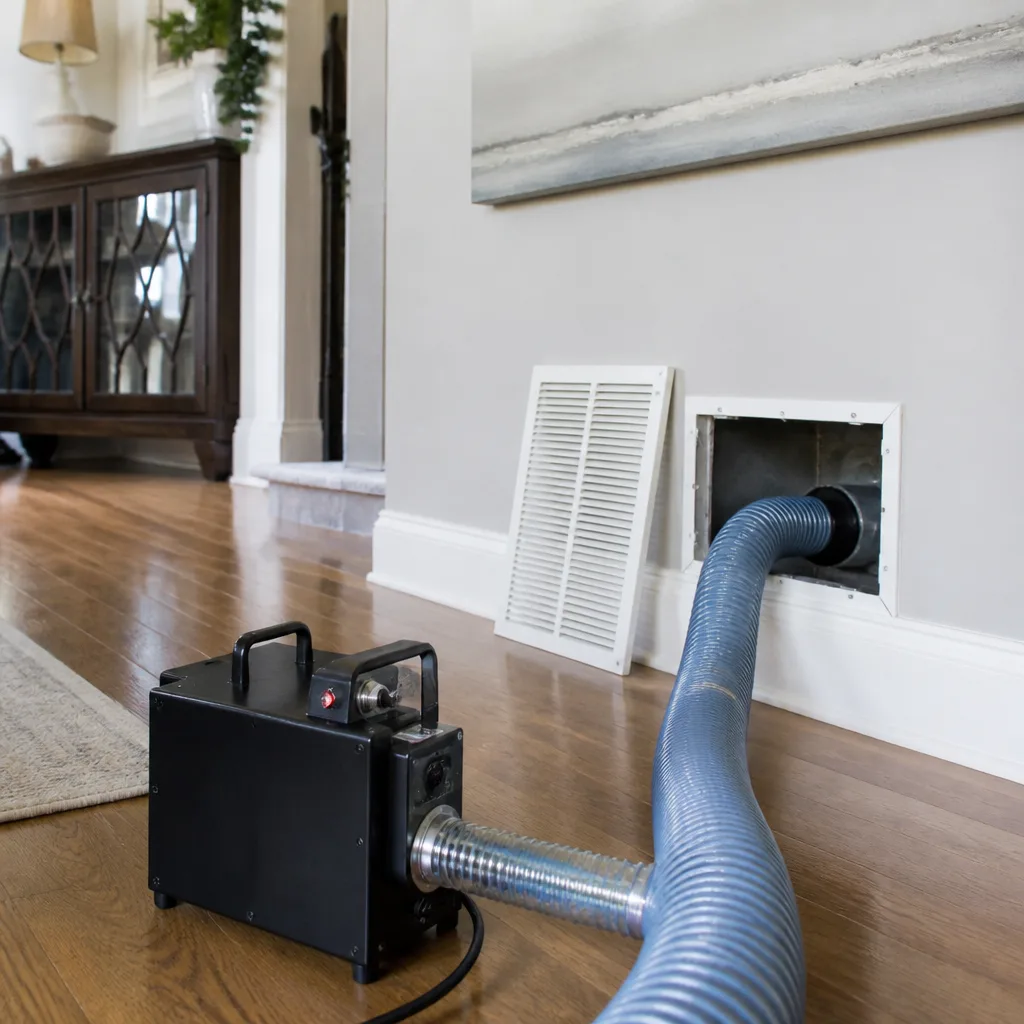 Sanitizing & deodorizing
Whole-system duct and dryer vent check with before-and-after photos - you see exactly what came out of your vents
That "$99 whole-house special" is a bait ad - the real number appears once they are in your hallway, or the "clean" is a shop-vac at the register. We photograph the inside of your ducts before and after instead.
The Complete Guide to Air Duct Cleaning in Fordham
Here’s the part most one-service cleaners won’t volunteer: cleaning the ducts alone doesn’t stop contamination. If a technician runs a vacuum through your supply and return lines but leaves a cracked duct joint, a dust-loaded evaporator coil, or a clogged dryer vent untouched, the system starts dirtying itself again within weeks. The ducts you just paid to clean collect debris from the parts no one addressed. That’s not a sales pitch. It’s how air moves through a house. This guide explains the full air pathway in Fordham, what a proper job actually involves, how Fordham’s older housing stock and urban particulate load change the equipment settings required, and how to tell a real full-system cleaning from a surface sweep.
Quick Answer
A proper air duct cleaning in Fordham covers the entire air pathway, not just the ducts: supply and return lines, the air handler, the evaporator coil, and often the dryer vent, all cleaned with professional-grade equipment rather than a shop vacuum. In Fordham’s pre-1970s plaster buildings and converted multifamily units, that job usually needs different vacuum settings and agitation tools than a newer suburban house, because hard-surface ductwork and narrow chases behave differently under negative pressure. The outcome you want is a system that stops recontaminating itself, not a before-and-after photo of one vent.
Styles & brands we work with
- Whole-home duct cleaning
- Dryer vent cleaning
- Camera inspection
- Sanitizing & deodorizing
Table of Contents
- The Full Air Pathway: What Actually Gets Cleaned
- Why Fordham’s Older Housing Stock Changes the Job
- What NADCA Standards Require vs. What Budget Companies Do
- Fordham’s Urban Particulate Load and Buildup Rates
- In-House vs. Subcontracted Work: How to Verify
- How Much Does Air Duct Cleaning Cost in Fordham?
- What a Full-System Cleaning Looks Like, Step by Step
- Dryer Vents: A Fire Risk, Not a Chore
The Full Air Pathway: What Actually Gets Cleaned
Air in your home follows a loop. It enters through return grilles, travels down the return trunk, passes through the air handler and evaporator coil, gets pushed out through the supply trunk and branch runs, and exits at the supply registers in each room. Any dirt that settles at one point in that loop gets picked up and redistributed to every other point the next time the blower runs. That’s why cleaning one node in isolation produces a temporary result at best.
Think of the system as five connected points:
- Return ducts. The most heavily loaded side of the system, because returns pull in room air along with whatever particulate is suspended in it. In Fordham’s street-facing apartments and ground-floor units, that includes road dust from the surrounding high-traffic corridors.
- Supply ducts. Usually cleaner than returns but can hold debris after renovations, or where branch runs have separated from the trunk.
- The air handler. The blower wheel and cabinet pick up a fine film of dust that thickens over years. A fouled blower moves less air, which raises your energy use and shortens equipment life.
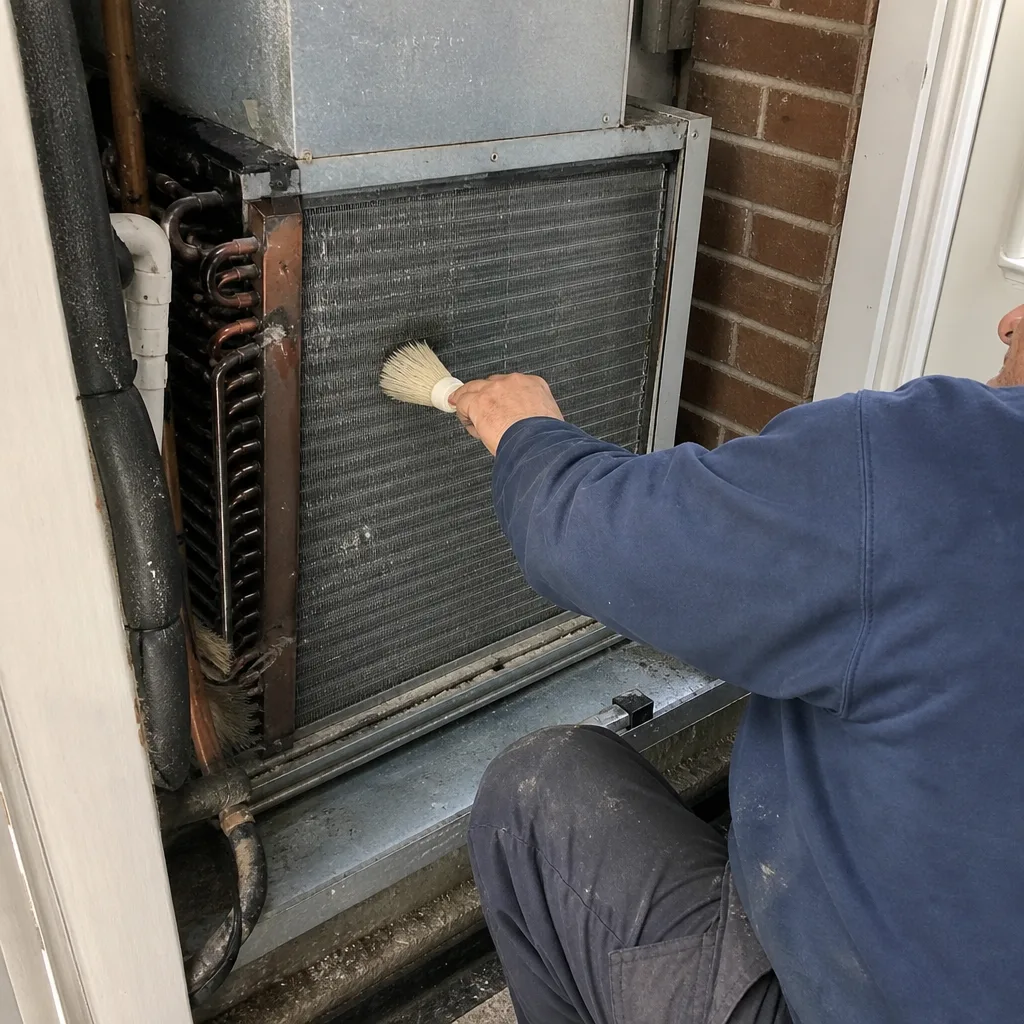
- The evaporator coil. A wet coil is a dust magnet. Once the fins load up, airflow drops and the coil can develop the damp, musty smell that homeowners mistake for a duct problem.
- The dryer vent. A separate pathway, but part of the same indoor air picture, and the one with the sharpest safety profile.
When we clean a system, every one of those points gets addressed in the same visit. That’s what we mean by your entire air system handled in one pass. Cleaning the ducts and leaving the coil alone is like washing a car and skipping the wheel wells.
Why Fordham’s Older Housing Stock Changes the Job
Fordham’s residential fabric is dominated by buildings from before the 1970s: plaster-and-lath walls, hard-duct systems, and a large share of single-family homes that have been converted into multifamily units over the decades. Each of those features changes how a duct cleaning has to be run.
Plaster walls and older framing tolerate less vibration than modern drywall assemblies. Aggressive rotary agitation at the wrong speed can crack plaster keys or loosen a joint that was already marginal. On the other hand, pre-1970s galvanized ductwork is typically harder and more rigid than modern flex duct, which means it can take a more thorough mechanical scrubbing, as long as the technician reads the assembly correctly first.
Converted multifamily buildings bring their own complications. When a single-family house is split into apartments, the ductwork often gets re-routed, spliced, or partially abandoned. You’ll find branch runs that serve a room that’s now a closet, or a return that was capped off during a renovation and never properly sealed. A cleaning crew that doesn’t inspect the full layout first will clean what it can see and miss what it can’t.
Narrow chases are the third variable. In older Fordham buildings, ducts frequently run through tight interior chases shared with plumbing or wiring. Getting a proper vacuum connection and agitation tool into those spaces requires the right hose diameter and flexible whip heads, not a one-size-fits-all setup. Professional-grade equipment matters here in a concrete way: the Rotobrush and Nikro systems we use are built specifically to work inside residential duct runs with controlled agitation and simultaneous negative pressure, which is different from dragging a shop vac hose into a vent opening.
What NADCA Standards Require vs. What Budget Companies Do
The National Air Duct Cleaners Association (NADCA) publishes the standard most reputable cleaners work to. It’s not a law, but it’s the useful benchmark when you’re comparing quotes. The gap between what the standard calls for and what a discount operation actually performs is where most homeowner disappointment comes from.
A NADCA-aligned job generally requires:
- Source removal, not just surface contact. The contamination has to be physically removed from the system under controlled conditions and captured, not stirred up and left to settle back down.
- Negative pressure throughout the job. The vacuum has to keep the whole system under negative pressure so dislodged debris travels toward the collection unit instead of into living spaces.
- Mechanical agitation of duct surfaces. Brushes, whip lines, or air tools physically loosen adhered debris. Vacuum alone doesn’t remove what’s bonded to the duct wall.
- Cleaning of the air handler and coil. Components inside the unit have to be addressed, not just the ducts leading to it.
- Access openings that get properly sealed afterward. Every access cut gets closed and sealed so the system is airtight when the crew leaves.
- Before-and-after documentation. Photos of the actual ductwork you can review, not stock images.
The common shortcut is the “one vent, one vacuum” routine: a technician removes each register, runs a hose into the opening for a few seconds, and calls it clean. No negative pressure on the whole system. No agitation. No coil work. No access openings. It looks like cleaning and produces almost none of the results. When you’re comparing quotes, ask specifically which of the six items above are included. A crew that can’t answer clearly is a crew to skip.
Fordham’s Urban Particulate Load and Buildup Rates
Fordham sits in one of the busiest corridors of the Bronx. Street-level dust from heavy vehicle traffic, diesel exhaust particulate, and normal urban grit all work their way into homes, especially units near major avenues with continuous bus and truck flow. The practical effect is that duct systems here go from “due for cleaning” to “overdue” faster than they would in a low-traffic suburban house.
That buildup shows up first in the returns and the blower. Diesel particulate is fine enough to stay suspended in room air for a long time, which means it goes wherever the return grilles pull. Once it reaches the air handler, it plates the blower wheel and the coil face with a thin, sticky film. From there, everything downstream is working harder to push air through a narrowing path.
You can’t eliminate urban particulate. You can manage it. Regular filter changes, prompt attention to coil fouling, and a full-system cleaning on a shorter interval than a suburban homeowner would need are the practical levers. When we visit a Fordham apartment or rowhouse, the return-side loading is usually the first thing that tells us how long it’s been since the system was really addressed.
We use Abatement Technologies equipment specifically because it’s engineered for indoor air quality remediation, not just debris collection. When the particulate load is fine and airborne, the containment and filtration side of the equipment matters as much as the vacuum power. Honeywell and Aprilaire filtration and air-quality components come up often in Fordham systems for the same reason: they’re the brands many homes here already have or are compatible with, so we’re working with what’s installed rather than around it.
In-House vs. Subcontracted Work: How to Verify
Many companies that advertise duct cleaning as one of a dozen services subcontract the actual work to a separate crew. You get a quote from one company and a technician from another, and the person who did the inspection may not be the person who does the coil work or the dryer vent. Coordination problems follow. So do missed steps.
Here’s how to verify that one team handles the whole job on one visit:
- Ask who does the coil work. If the answer is “we’ll refer that out,” your cleaning is going to stop at the duct openings.
- Ask what happens if a duct leak is found during inspection. A full-system provider seals it on the spot. A clean-only operation hands you a phone number.
- Ask about dryer vent. If it’s an add-on they coordinate with someone else, that’s a subcontract chain, not a single crew.
- Ask which equipment will be on site. A reputable full-system provider can name specific equipment types and brands.
- Ask for before-and-after photos of your own ducts, taken during the visit. If they can’t document it, don’t assume it happened.
Our whole model is built the other way: air duct cleaning, dryer vent cleaning, HVAC cleaning, duct repair and sealing, and air quality and sanitizing, all in one visit by the same team using the same equipment. We find the leak, we seal the leak. We clean the coil, we clean the ducts feeding it. That’s the full-air-pathway promise, and it’s what makes the outcome durable.
How Much Does Air Duct Cleaning Cost in Fordham?
Air duct cleaning in Fordham typically runs $350 to $700 for a whole-system job on a typical single-family home, and $450 to $900 for larger or multifamily pieces where multiple units or zones need to be covered. Price is set per system, not per vent, and the written estimate you receive before work starts is the final price. There is never a coupon that grows into a much larger invoice once the technician is on-site.
Line-item estimates usually break down like this:
- Supply and return duct cleaning: $225 to $475 depending on number of runs and how accessible the duct layout is.
- Air handler and blower cleaning: $100 to $200.
- Evaporator coil cleaning: $125 to $275.
- Dryer vent cleaning as a standalone: $125 to $250 depending on length and access.
- Duct repair and sealing of leaks found during inspection: $150 to $450 depending on the number and location of breaches.
- Air quality and sanitizing treatment: $100 to $225.
A Fordham multifamily or a pre-1970s building with convoluted duct routing prices at the higher end, because more access openings and more careful agitation are required. What you’re paying for is thoroughness: full-system coverage, professional-grade equipment on site, before-and-after photos of your actual ducts, and a flat price per system agreed before the work begins. A quote that lands well below these ranges usually corresponds to the “one vent, one vacuum” routine described earlier, and it’s not a cheaper version of the job. It’s a different, shorter job.
If you want an exact figure for your Fordham home, call (833) 901-6929. Estimates are free, and the written estimate sets the final price.
What a Full-System Cleaning Looks Like, Step by Step
A real full-pathway cleaning in Fordham follows a consistent sequence. Here’s how the job generally goes, whether the building is a converted multifamily, a rowhouse, or a newer single-family home:
- Initial inspection and layout mapping. The crew traces every supply and return run, notes abandoned branches or capped returns, and checks the air handler, coil, and dryer vent for issues.
- Negative pressure hookup. A large HEPA-filtered vacuum connects to the main trunk, putting the whole system under controlled negative pressure for the duration of the job.
- Register-by-register agitation. Using rotary brushes and whip lines matched to the duct material (harder for older galvanized, gentler for flex), the crew loosens debris from every accessible run while the vacuum captures it.
- Air handler and coil cleaning. The blower wheel and cabinet get cleaned, and the evaporator coil is cleaned with a coil-safe solution compatible with the system.
- Sanitizing treatment when microbial concerns are present (musty odors, post-renovation, suspected moisture issues). This is an option, not a default, and the crew should be willing to explain why it’s being recommended.
- Duct repair and sealing. Any breaches, separated joints, or disconnected runs discovered during cleaning get sealed before access openings are closed.
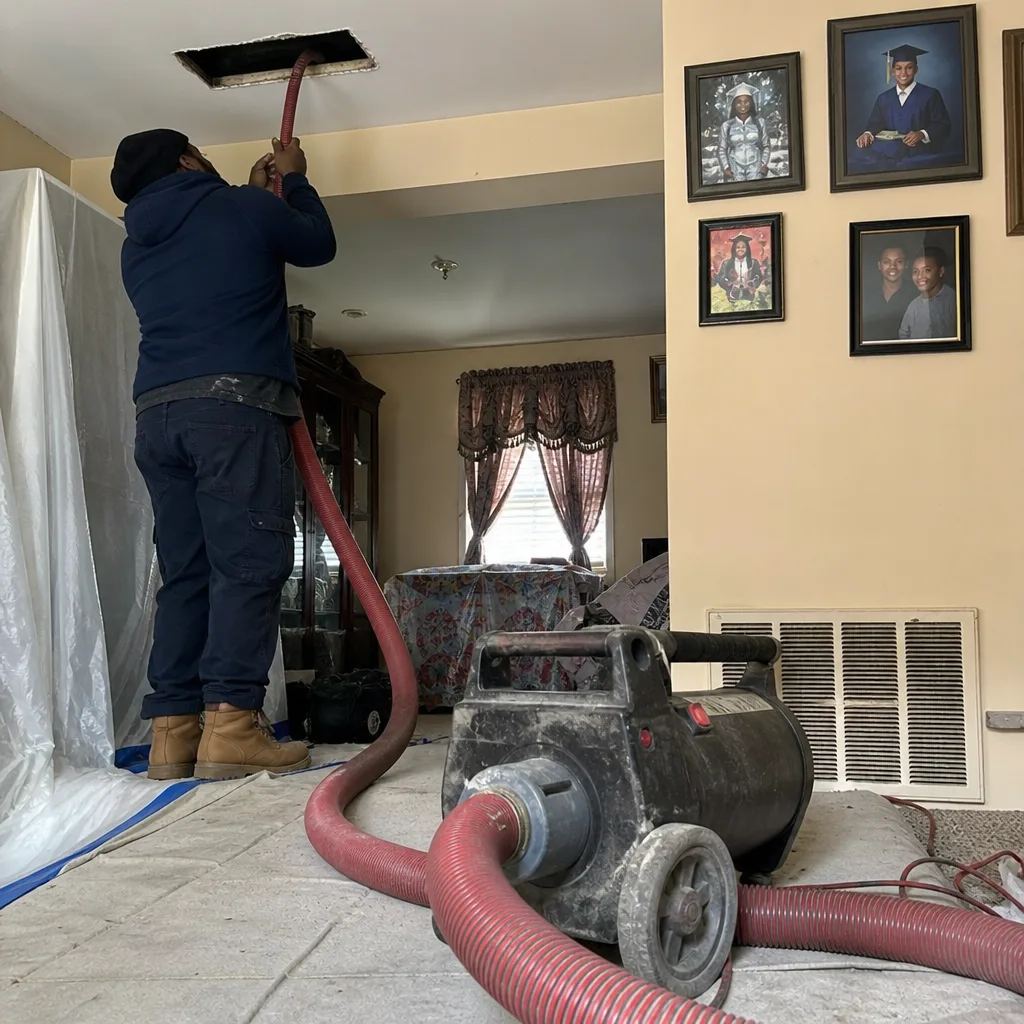
- Access closure and final walkthrough. All access cuts are sealed, and you get photos of your own ducts before and after so you can confirm the work.
The point of that sequence is that each step sets up the next. If the vacuum isn’t attached properly, agitation just launches debris into the room. If the coil isn’t cleaned, the ducts you just cleaned re-load with particulate from the fouled coil surface. Full-system jobs don’t have gaps because the outcome depends on all of them being present.
Dryer Vents: A Fire Risk, Not a Chore
A dryer vent packed with lint is a fire hazard, not just a maintenance item. Lint is highly combustible, and the shortest path from a lint-choked vent to a house fire is a dryer running at temperature. Most homeowners think of vent cleaning as something they’ll get to eventually. From a technician’s perspective, it’s a safety service, and it should be handled on a schedule.
Vent runs in Fordham’s older buildings are frequently the problem. A thirty-foot run with two 90-degree turns, common in rowhouse conversions, captures lint far more aggressively than a short straight run to the outside wall. If the exterior flapper doesn’t open cleanly or the termination is screened, the problem compounds. That’s the pattern that leads to dryer shutdowns, longer dry cycles, and eventually a hazard.
Our dryer vent cleaning is a standalone service, and it’s also part of the full-system visit when it’s time. We check the run length, the number of turns, the termination, and the vent hood. We use Guardsman fittings and professional vent tooling that reach the full length of the run, rather than the flex-brush-in-a-drill approach some budget operations use. When the same crew is already there for duct work, adding the dryer vent is a matter of scheduling and equipment, not referring to another vendor.
If your dryer takes two cycles to dry a normal load or the exterior flapper doesn’t open freely, that’s a signal worth acting on.
Common Mistakes to Avoid
- Opting for the cheapest quote without asking what’s included. A per-vent price that looks like a bargain usually describes a job without negative pressure, without agitation, and without coil cleaning. You get the shorter job for the lower price, and the system reloads within weeks.
- Cleaning the ducts and skipping the coil. Every full cleaning should address the evaporator coil and the blower. A fouled coil will throw particulate back into freshly cleaned ducts, especially in Fordham where urban particulate load is already high.
- Ignoring duct leaks found during cleaning. Breaches and separated joints should be sealed during the same visit, not deferred to “a separate contractor.” Deferring means the return line sucks in attic or basement air, and your clean ducts carry it into the living space.
- Treating dryer vent as a someday thing. In converted multifamily buildings where vent runs are long and loaded with turns, lint accumulation is faster. This is a fire risk in Fordham just as much as anywhere else.
- Skipping the layout inspection on older buildings. Fordham’s pre-1970s stock often has re-routed or partially abandoned branch runs from past conversions. A crew that doesn’t map the layout cleans only the easiest nodes.
- Accepting “we cleaned it” without seeing the evidence. Ask for before-and-after photos of your own ducts. If they can’t produce them, the work was not documented, and there’s no way to know what was done.
- Letting a musty smell or allergy flare-up become the permanent baseline. Odor and worsened allergies are common symptoms of a fouled coil or microbial growth in a damp duct run. Sanitizing and coil cleaning solve it; a duct-only sweep won’t.
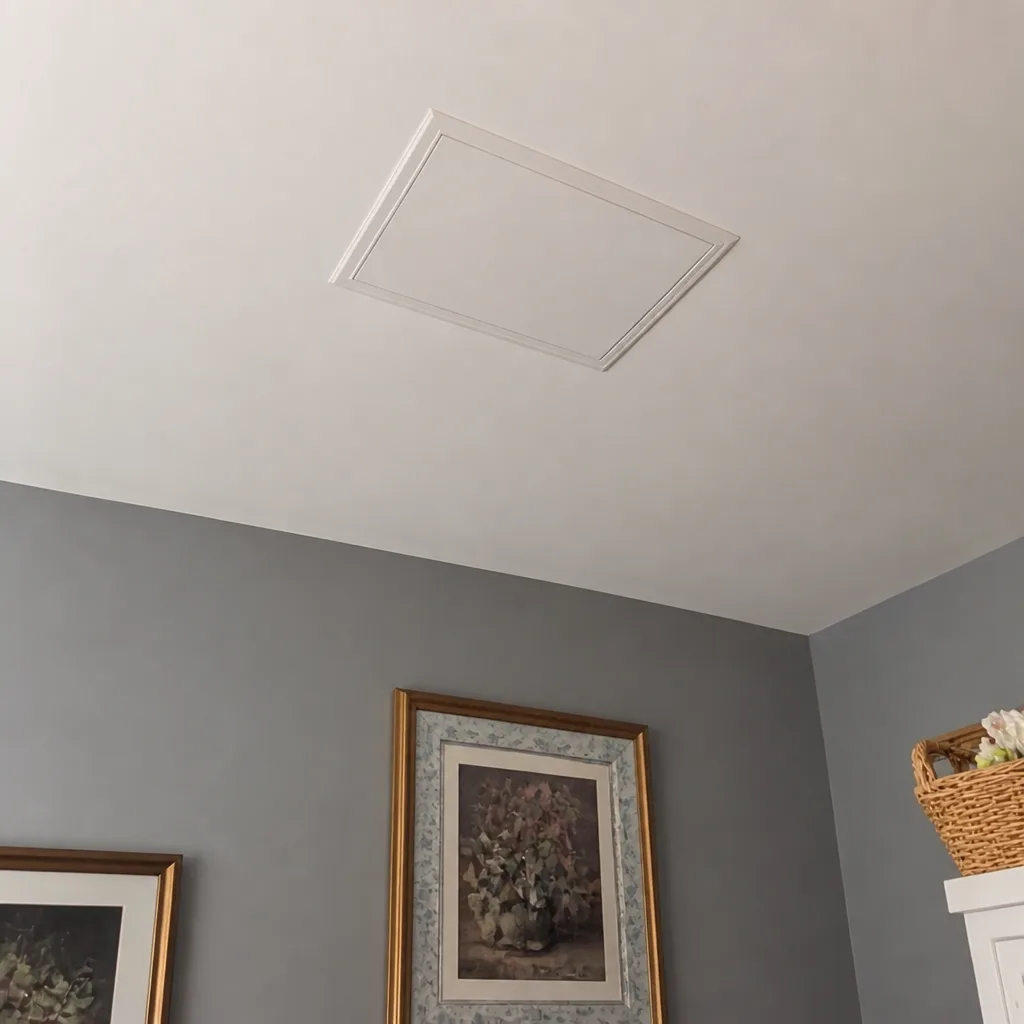
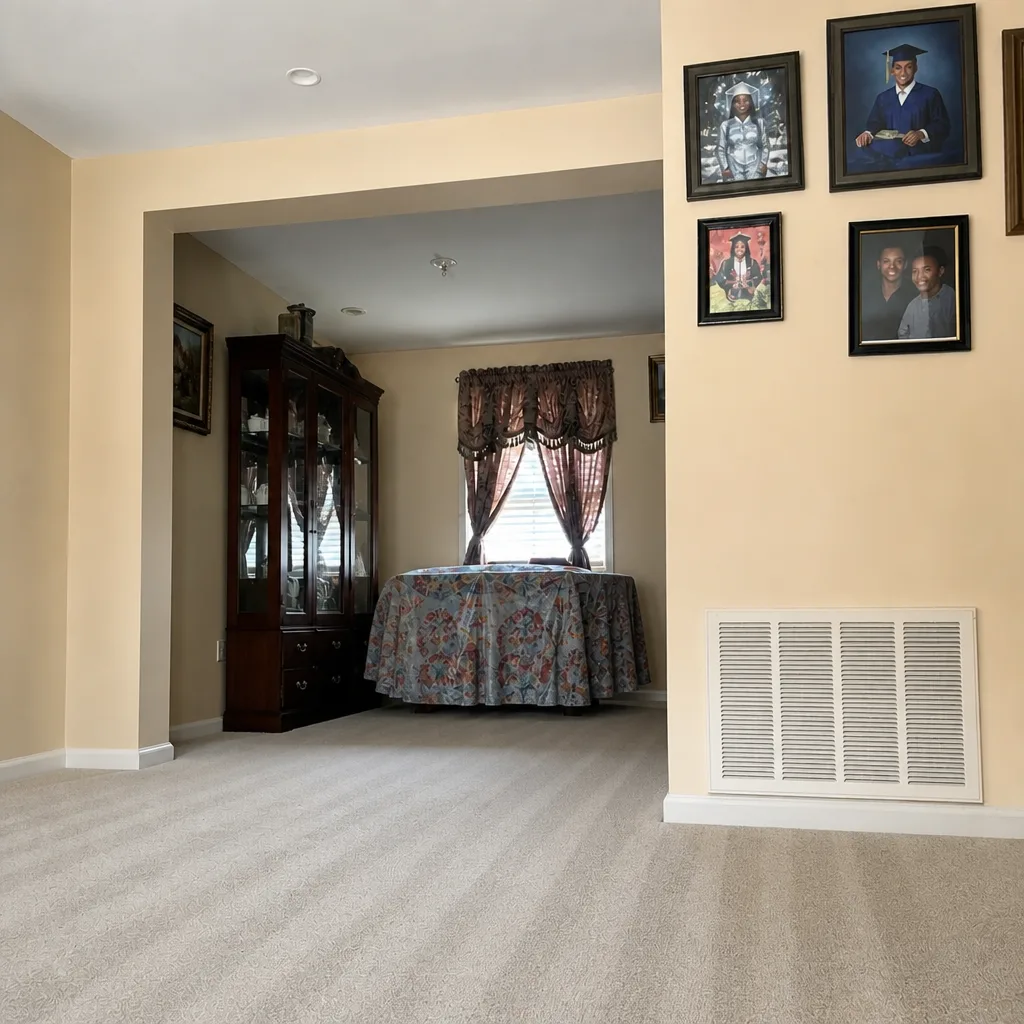
See the difference
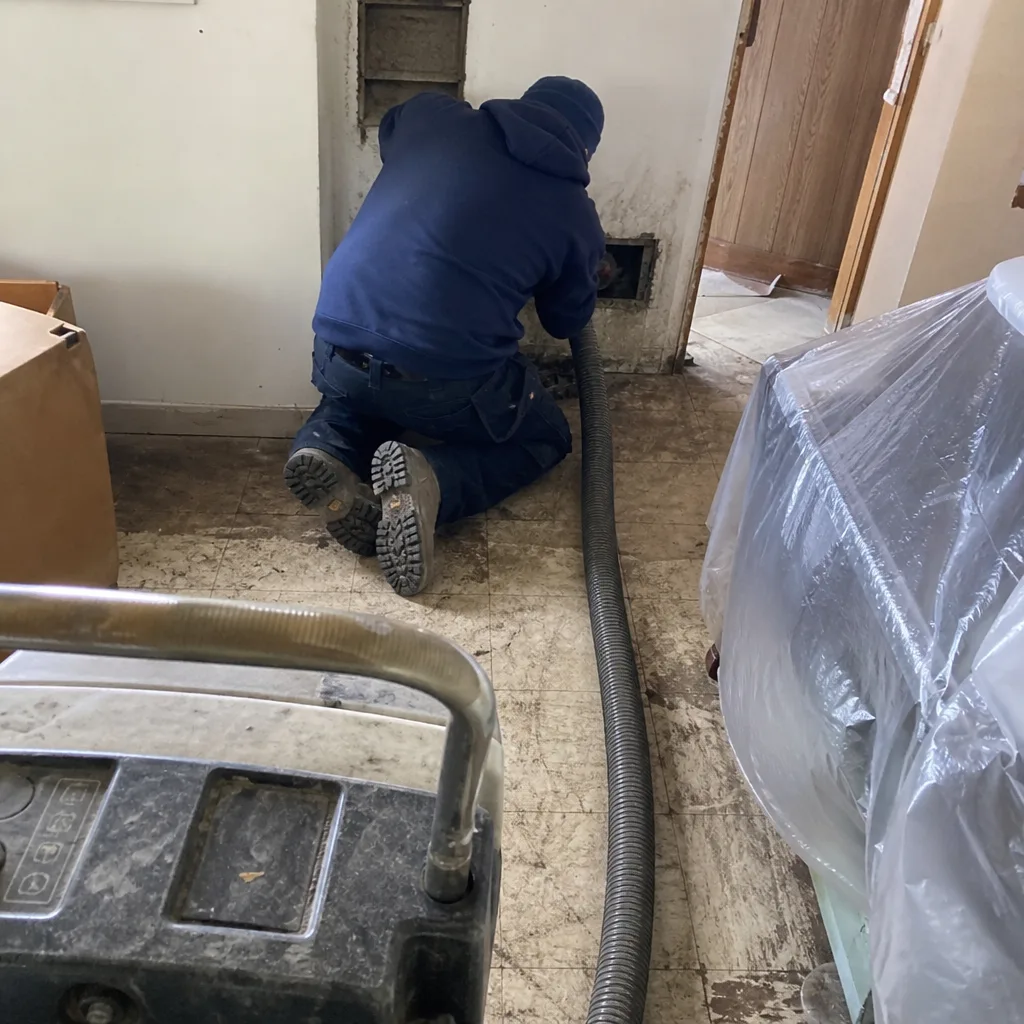 Before
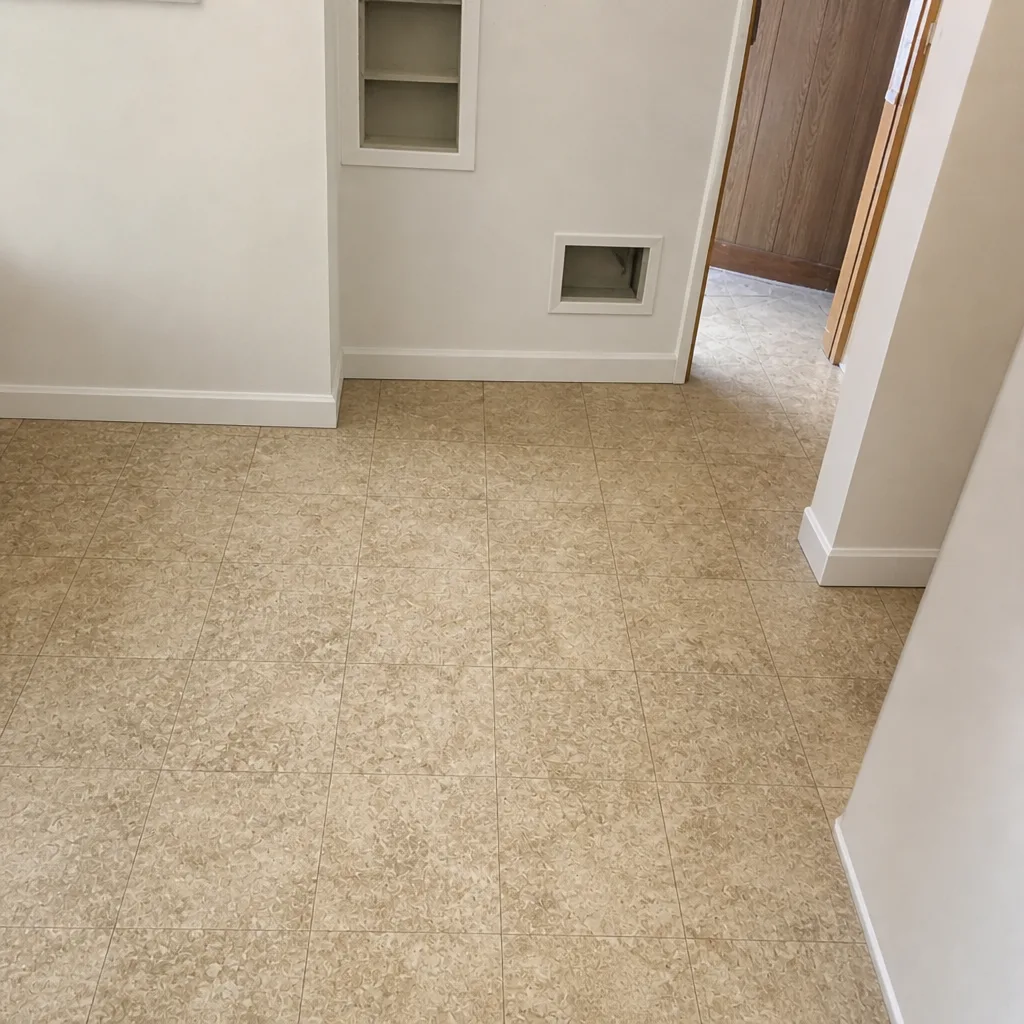 After
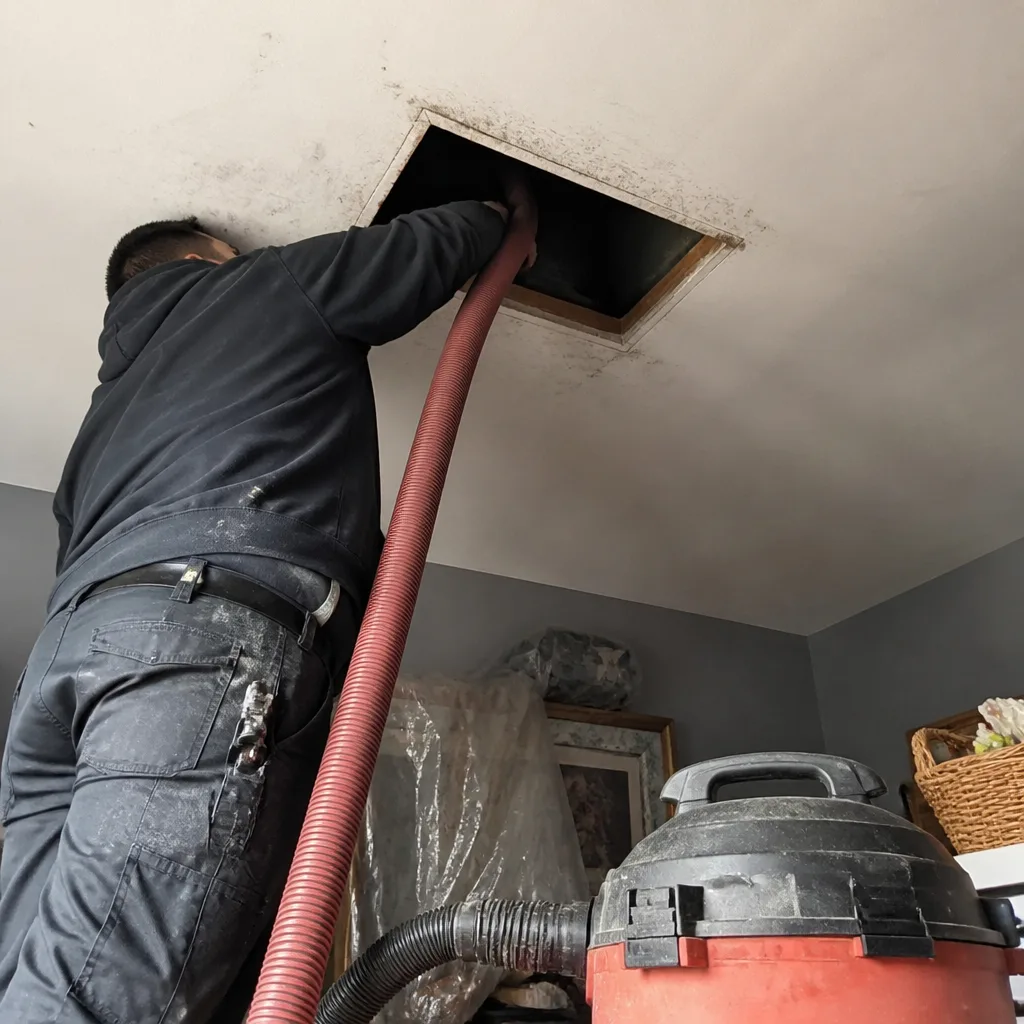 Before
 After
 Before
 After
When to Call a Professional
Some signs need a technician’s inspection, not a filter change. Call us when you see visible dust streaks around registers, when a room stays dustier than the rest of the home, when you’ve had a renovation and the ducts are full of drywall dust, when there’s a persistent musty odor that doesn’t go away after filter swaps, or when the system is more than a few years past its last cleaning. Fordham’s older buildings and dense urban particulate load make those cues show up faster, and the risk of a duct leak that’s been pulling in basement air is worth ruling out. Dryer vents that don’t dry loads in one cycle, or exterior flappers that don’t open freely, are also worth a call. Duct repair and sealing, air quality and sanitizing, and dryer vent cleaning are all handled in one visit with the same crew, so there’s no coordination between vendors.
Air Duct Cleaning Fordham offers free estimates in Fordham. Call (833) 901-6929 for yours.
Frequently Asked Questions
For a typical Fordham home, every two to four years is a reasonable interval, and somewhat more frequent in units near high-traffic corridors or older multifamily conversions where particulate load and duct complexity are higher. Homes with pets, recent renovations, or allergy-sensitive occupants benefit from the shorter end of that range. A quick visual inspection will tell you faster than a calendar will. Call (833) 901-6929 for an exact quote; estimates are free.
Typical full-system pricing in Fordham runs $350 to $700 for a single-family home, and $450 to $900 for larger or multifamily pieces. That covers supply and return ducts, the air handler, and the evaporator coil. Dryer vent cleaning as a standalone runs $125 to $250, and duct repair and sealing is $150 to $450 depending on what’s found. The written estimate you receive before work begins is the final price. Call (833) 901-6929 for an exact quote.
Usually because they’re quoting a different, shorter job: no negative pressure on the whole system, no mechanical agitation, no coil or air handler work, and no access openings. The price is lower because the scope is smaller. A full-pathway job in Fordham includes all of those, which is why it prices in the ranges above. There is no coupon that expands on-site; the estimate is the price. Call (833) 901-6929 if you want a like-for-like comparison.
You get before-and-after photos of your own ductwork from the visit, not stock images. That’s the standard confirmation: photo evidence, combined with the technician walking you through what was cleaned, what was sealed, and what was left untouched and why. If a company can’t provide photos of your system, ask why. Call (833) 901-6929 to schedule a visit with documented results.
Yes, and often more urgently than a modern single-family home. Conversions frequently leave abandoned branch runs, capped returns, and re-routed ducts that hold debris and can leak air from adjacent spaces. A full-system inspection maps the actual layout before any cleaning begins, so nothing is missed. Air Duct Cleaning Fordham handles this work in one visit with the same crew. Call (833) 901-6929 for a free estimate.
Yes. Dryer vent cleaning is available as a standalone service and also as part of a full-system visit. In Fordham’s older buildings, long vent runs with multiple turns are common, and lint buildup in those configurations is a real fire risk. Handling it during the duct cleaning visit means one crew, one schedule, no separate vendor. Call (833) 901-6929 to book.
The Bottom Line
Air duct cleaning done right is a system-wide job, not a duct-only sweep. In Fordham, that means reading the age and layout of the building properly, cleaning the returns, supplies, air handler, and coil in sequence under controlled negative pressure, sealing any leaks found during the visit, and addressing the dryer vent as a safety service. The differences between a full-pathway cleaning and a discount one-vent pass are invisible from a photo. They show up in the coil, the sealed joints, and how long the result lasts. Professional equipment from brands like Rotobrush, Nikro, Abatement Technologies, and Guardsman, plus in-house coverage across duct cleaning, HVAC cleaning, duct repair and sealing, dryer vent cleaning, and air quality and sanitizing, means one crew, one visit, one accountable result. For a written estimate on your Fordham home, call (833) 901-6929. We answer 24/7. Fast dispatch from 7am to 7pm, Sunday through Friday.
Written by the team at Air Duct Cleaning Fordham.